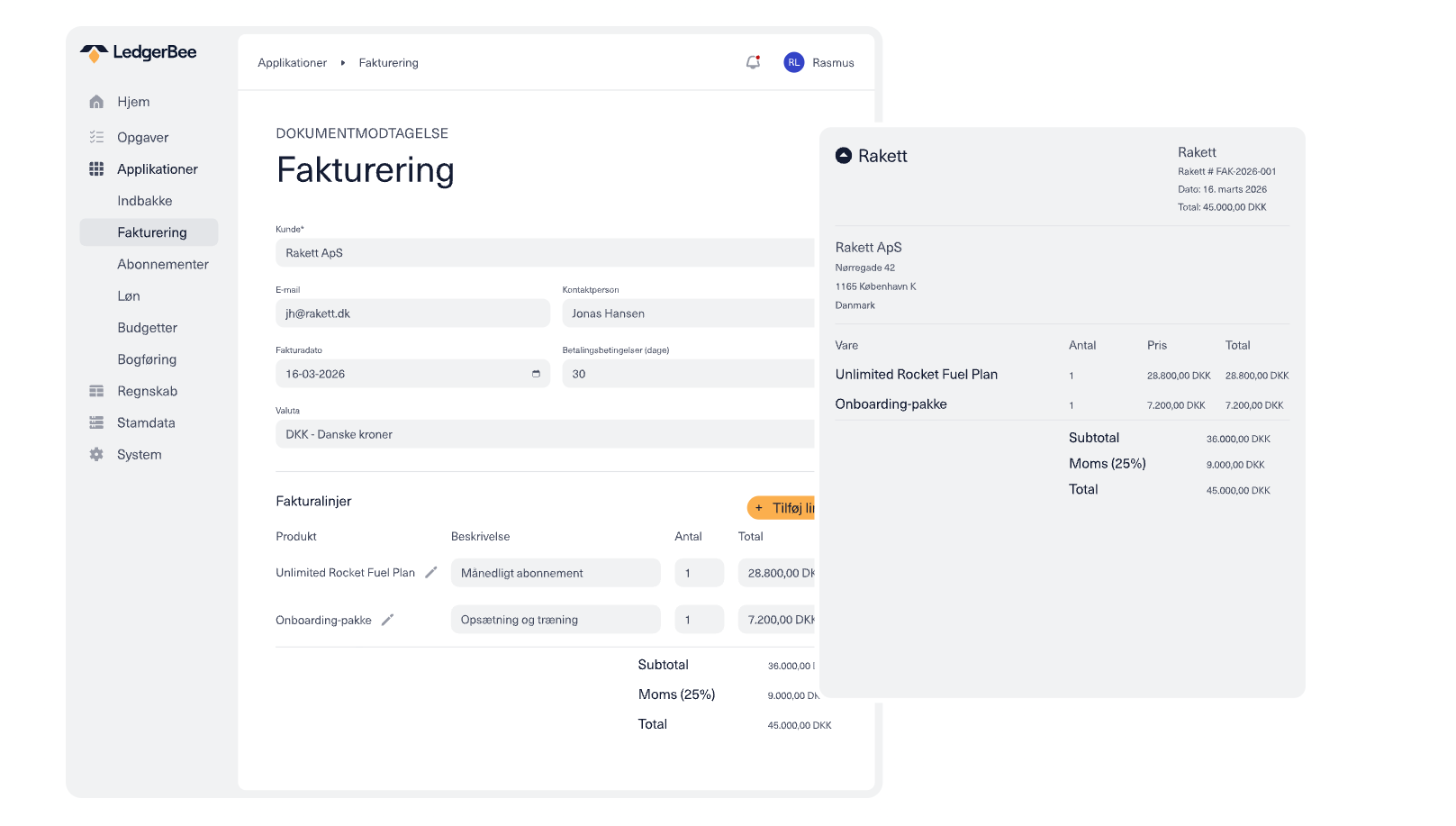
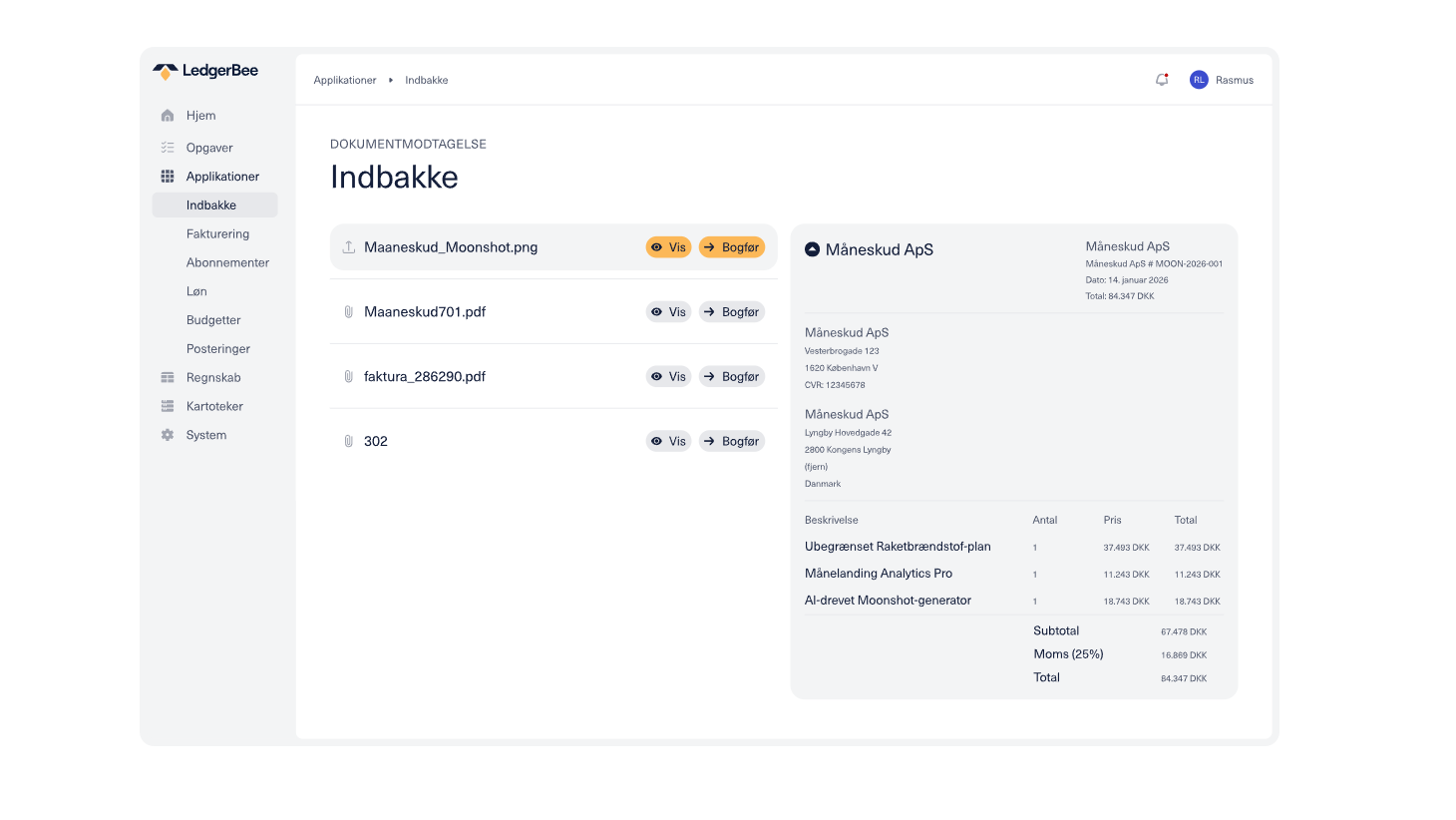
What does manual invoice processing cost? Work out your own price
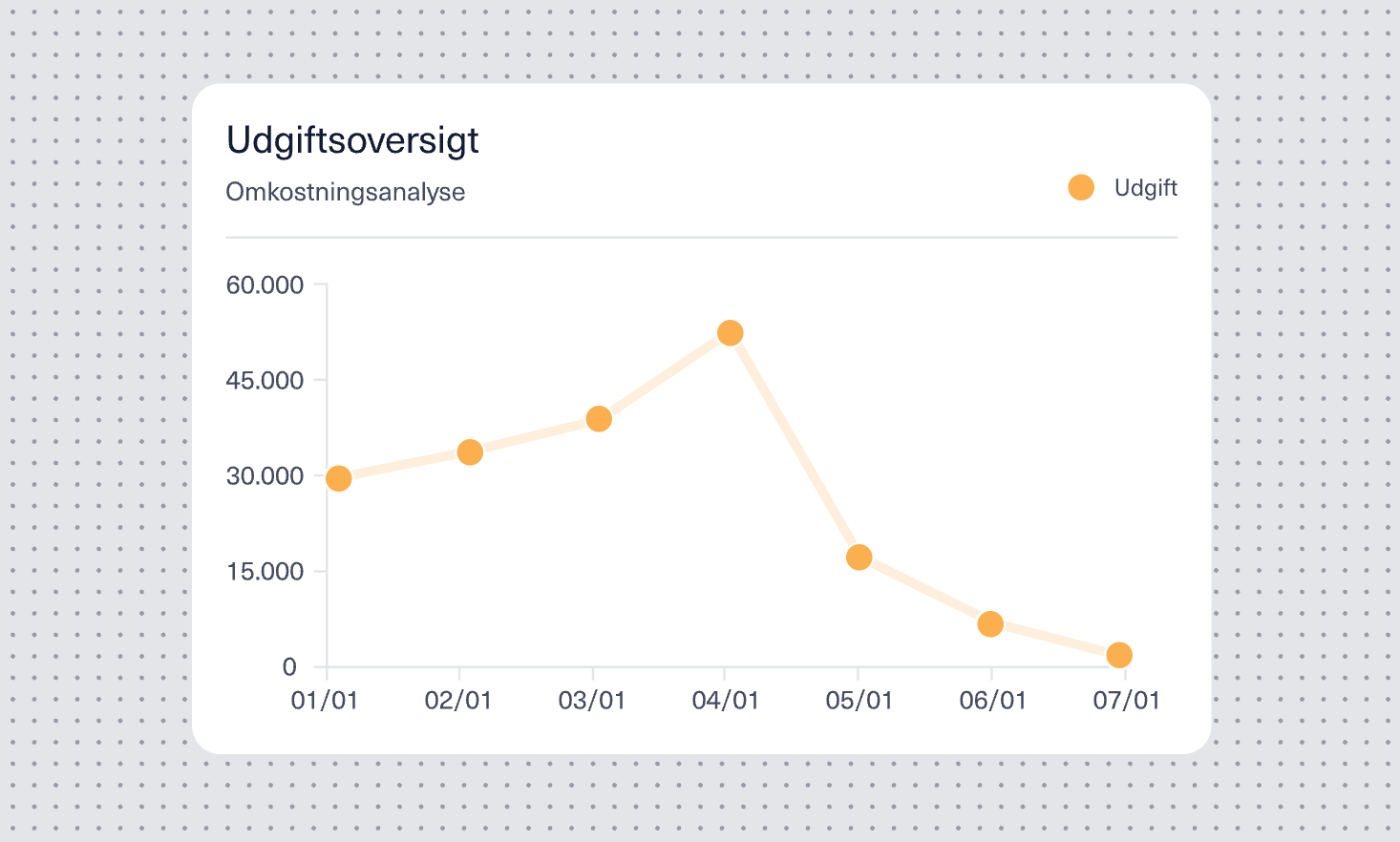
Manual invoice processing is a taxi meter running in the background. It counts every minute an invoice is opened, keyed in, chased and paid – but you never see the bill.
It does not arrive as an invoice, but as salaried hours, reminder fees and a month that is not closed on time. Here you can work out your own price and see where the money disappears. This article is part of our guide to automated invoice processing.
Calculate your price
Nudge the numbers, or enter your own. The calculator works with your time and salary.
Worked example. 100 supplier invoices a month, each taking 15 minutes, add up to 300 hours a year. With a monthly salary of DKK 45,757 – the average for bookkeepers in Denmark incl. pension in 2024 – that costs approx. DKK 85,600 in salary a year, or DKK 71 per invoice.
What does an invoice cost?
The research firm Ardent Partners has measured what it costs to process a supplier invoice. In the 2025 edition the average is USD 9.40 per invoice. The best 20% – those with the lowest cost and the shortest processing time – do it for USD 2.78. That is 70% less. The study is based on responses from 212 accounts payable professionals, collected in spring 2024.
The figure is an international average. Your own price depends on how many invoices you receive, how many people have to approve them, and how many suppliers send PDFs. That is why it makes more sense to work out your own price than to borrow someone else's.
Where does the time go?
An invoice has two clocks. One counts working time, the other waiting time. Working time costs salary. Waiting time costs reminders and overview.
Working time is spread over four steps:
- Receipt and data entry. The invoice has to be found in the inbox, opened and keyed in – or checked, if it has been captured with invoice scanning.
- Account coding. Account, VAT and department have to be chosen, and an invoice with several lines may have to be split across several accounts.
- Approval. The invoice is sent to whoever owns the expense, and waits until that person responds. With electronic invoice approval it goes to the right person automatically.
- Payment and reconciliation. The amount is keyed into online banking, the payment is reconciled, and the invoice is posted.
The waiting time lies between the steps. In Ardent Partners' study, an average of 9.2 days pass from an invoice being received until it is approved. The best 20% do it in 3.1 days. The challenge mentioned by most is exceptions – invoices that cannot take the normal route (53%). Long processing times come in second (41%).
The hidden costs
Salary is only the part of the bill you can see. Three things come on top:
- Reminders and interest. If you pay late, under Danish rules the supplier can charge up to three reminder fees of no more than DKK 100 each, at least 10 days apart, and default interest at Danmarks Nationalbank's lending rate plus 8 percentage points. Between businesses, the supplier can also claim a fixed compensation amount of DKK 310, regardless of the size of the invoice. A single invoice that sits waiting can therefore cost more than all the time you spend on it.
- Exceptions. On average, 14% of invoices require manual intervention, and only 32.6% go all the way through without being touched (Ardent Partners). Every exception puts extra minutes on the meter.
- A month that cannot be closed. As long as invoices are waiting for approval, they are missing from the accounts, and the month-end close drags on. Until they are posted, you do not have the full picture of what you owe.
How to measure it yourself
The calculator gives an estimate. If you want to know your own price, measure it:
- Count the invoices. Take the average number of supplier invoices per month over the last three months.
- Track time for two weeks. Write down the minutes per step – the approvers' too.
- Work out the price. Hours × hourly cost ÷ number of invoices gives the price per invoice.
- Measure the waiting time. Note the days from the invoice landing until it is approved and paid.
Then you have a "before" figure that a new solution has to beat.
When does it pay off?
Work out the saving per invoice, and hold it up against what a solution costs per invoice.
In the worked example, an invoice costs DKK 71 in salary. If you get down to the level of the best 20% in Ardent Partners' study – 70% less – you save approx. DKK 50 per invoice. Among the add-on tools that publish prices, 50 supplier invoices a month typically cost DKK 370–900 excl. VAT – DKK 7–18 per invoice. In the example, the saving is therefore several times greater than the price per invoice. On top of that comes the accounting software that the tool sits on.
The cheapest invoice is the one that does not need to be captured at all. An e-invoice via NemHandel and Peppol arrives as data and can go all the way without any data entry.
LedgerBee is a finance system for SMEs – and the accountants and bookkeepers who serve them – who want to bring all their finances together in one place. Here, invoice processing is part of the finance system, so there is no integration between two systems to maintain.
Frequently asked questions
What does it cost to process an invoice manually?
It depends on your time and salary. With 15 minutes per invoice and an average bookkeeper's salary incl. pension, it is approx. DKK 71 in salary per invoice. In Ardent Partners' international study the average is USD 9.40.
How long does it take to process an invoice?
In Ardent Partners' study, an average of 9.2 days pass from receipt to approved invoice – 3.1 days for the best 20%. The time covers both work and waiting, for example for approval.
What can a supplier charge if we pay late?
Up to three reminder fees of no more than DKK 100 each, default interest at Danmarks Nationalbank's lending rate plus 8 percentage points and – between businesses – a fixed compensation amount of DKK 310.
How do you work out the price per invoice?
Multiply the hours you spend on invoices by the hourly cost, and divide by the number of invoices. The hourly cost is the monthly salary divided by 160.33 hours, which corresponds to a working week of 37 hours.
Want to see how much of your invoice processing can run by itself? Book a demo
Sources: Ardent Partners – AP Metrics that Matter in 2025 · The Danish Interest Act (Renteloven, LBK nr. 459 af 13/05/2014) · The Danish Agency for Public Finance and Management (Økonomistyrelsen) – Guidance on payment deadlines and the charging of fees and interest on late payment (2022) · Statistics Denmark – LONS20: Earnings by occupation (2024) · The vendors' own pricing pages and price calculators, reviewed 22 September 2026. Prices excl. VAT.